Social housing landlords have more tenant data than ever, but turning it into action is the challenge.
Social housing has become increasingly data-rich. Most landlords now have access to a wide range of customer evidence: TSM results, complaints data, transactional surveys, tenant engagement feedback, scrutiny findings, operational performance information and qualitative comments.
On paper, this should give organisations a much clearer understanding of the customer experience. But in practice, many landlords are still asking the same questions:
- What are tenants really telling us?
- Why are satisfaction scores moving in this direction?
- Which issues should we prioritise?
- Are we acting on the right things?
- Can we evidence that tenant voice is influencing decisions?
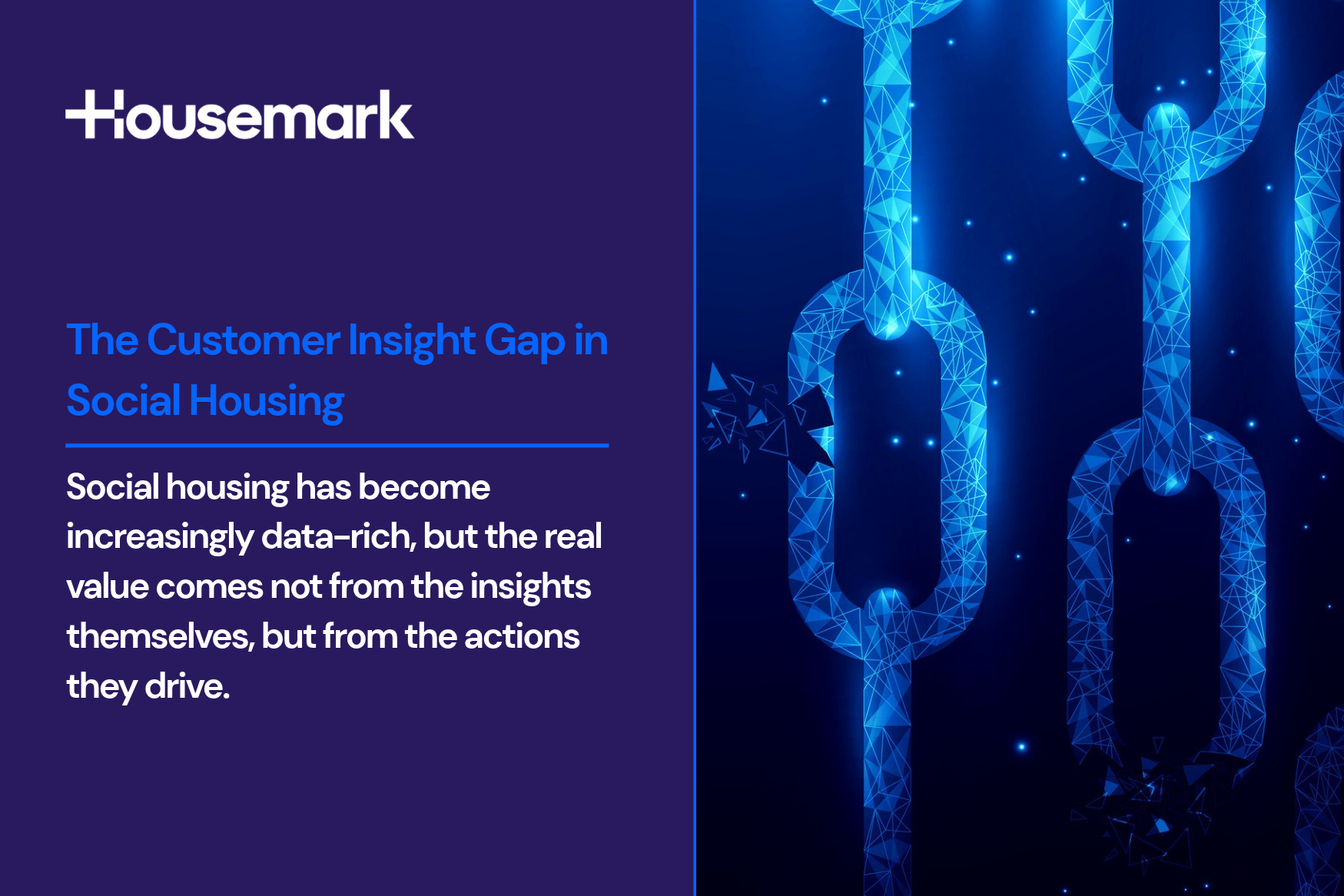
This is the Customer Insight Gap. It is the gap between having customer evidence and having the capability to turn that evidence into better decisions, stronger assurance and meaningful service improvement.
The introduction of TSMs has helped create a more consistent sector-wide focus on tenant feedback. Alongside this, many landlords have strengthened their complaints reporting, tenant engagement arrangements and transactional feedback programmes. This is positive progress. But the volume of available information can also create its own challenge. When feedback sits across multiple teams, systems and reports, it can become fragmented. Complaints may sit with one team, transactional surveys with another, TSMs with a third, and tenant engagement with a fourth. Each dataset may tell part of the story. But unless those sources are brought together, the organisation may struggle to understand the full customer picture.
Data tells us what is happening. Insight tells us why it is happening and what should be done next. For example, a landlord may know that satisfaction with repairs has declined. But without deeper insight, they may not know whether the issue is:
- Appointment availability
- Communication
- First-time fix
- Quality of workmanship
- Contractor behaviour
- Expectations management
- Follow-up after completion
A satisfaction score alone cannot answer those questions. The real value comes from connecting different sources of evidence and interpreting them in context.
The Customer Insight Gap is not usually caused by a lack of effort. In many organisations, teams are working hard to collect feedback, prepare reports and respond to issues. The gap often exists because customer insight capability is underdeveloped or dispersed.
Many landlords do not have:
- A dedicated Head of Insight
- A customer intelligence function
- Specialist research capability
- A joined-up Voice of Customer framework
- A clear route from feedback to service improvement
This is particularly true for smaller and medium-sized landlords, where resources are limited and senior managers often have broad portfolios. Yet these organisations still face the same expectations around tenant voice, customer understanding, service improvement and Board assurance.
The Customer Insight Gap often shows up in familiar ways:
- Reports describe results but do not explain them. Boards receive satisfaction scores and complaint volumes, but little interpretation of what the evidence means.
- Customer feedback is not joined up. TSMs, complaints, engagement findings and operational data are considered separately rather than as one customer evidence base.
- Actions are not clearly linked to insight. Improvement plans exist, but the connection between feedback, action and outcomes is not always clear.
- Tenant voice is heard but not always evidenced. Tenants may be consulted, but it is harder to demonstrate how their feedback has shaped decisions.
- Leadership teams lack confidence. Senior leaders may know that customer feedback is important, but lack confidence in how to interpret competing signals.
Closing the gap
Closing the Customer Insight Gap requires more than producing better reports. It requires organisations to build stronger capability in five areas:
- Connecting evidence – Bringing together TSMs, complaints, transactional feedback, engagement findings and operational performance.
- Interpreting meaning – Moving beyond scores to understand root causes, patterns and themes.
- Prioritising action – Identifying which issues matter most and where improvement effort should be focused.
- Embedding insight into governance – Ensuring customer evidence informs leadership, Board assurance and strategic decisions.
- Tracking impact – Demonstrating how feedback has led to action and whether that action has improved outcomes.
Where to start
For many landlords, the first step is not another survey. The first step is understanding how effectively the organisation currently uses the customer evidence it already has. That is where a Customer Insight Health Check can add value.
The Health Check provides an independent assessment of how effectively a landlord collects, interprets, reports and acts upon customer evidence. It examines customer insight maturity across areas such as customer evidence, tenant voice, governance, decision-making, improvement and customer experience.
For organisations that need ongoing support, this can then lead naturally into Fractional Customer Insight Leadership: flexible access to senior customer insight expertise without the cost of employing a full-time Head of Insight.
Because the real challenge for many landlords is no longer listening. It is understanding, prioritising and acting.
Collecting Tenant Satisfaction Measures is only the starting point. With Housemark’s TSM Survey and Consultancy, you can go beyond compliance to better understand your residents, uncover what drives satisfaction, and turn insights you already have into meaningful service improvements.
From survey design and robust analysis to benchmarking, reporting and action planning, our experts support you throughout the TSM lifecycle, helping you make your data work harder for your organisation and your communities.